How School Principals Are Using AI to End Unattended Classroom Incidents
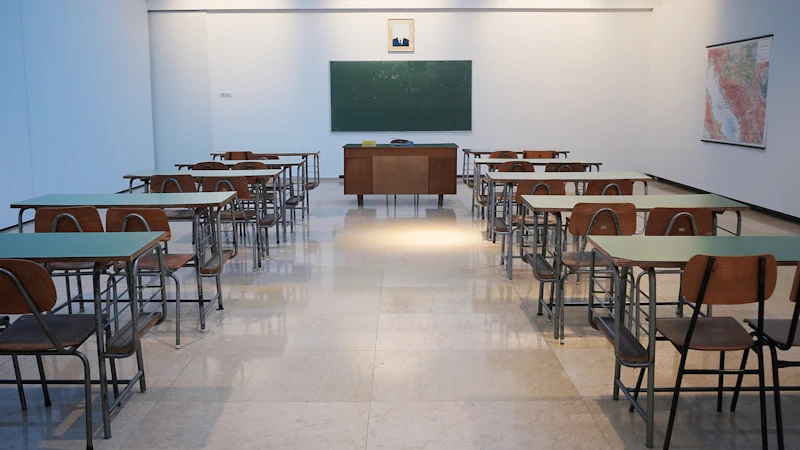
Rajesh Nair, principal of a CBSE-affiliated school in Bengaluru with an enrolment of 1,400 students, had a problem he could not solve with rosters. His school had 52 classrooms across three floors, 68 teaching staff, and a duty schedule that looked correct on paper every morning and was quietly fiction by 9:30 AM. Teachers ran late. Emergency situations in one classroom left another unattended. Substitute arrangements were made informally and sometimes not at all. He had no way of knowing, from his office or while walking the campus, which classrooms had a teacher present and which did not — short of physically visiting each one, which took 40 minutes and was already too late for anything that had happened in the interim.
The unattended classroom is one of the most consequential and underreported risk categories in Indian school management. When a classroom of 35 children between the ages of 8 and 14 has no supervising adult, the risk profile shifts rapidly. Bullying escalates without deterrence. Physical altercations that would not occur in a supervised environment become possible. Students with behavioral challenges lose the regulatory presence that keeps the classroom functional. And in the event of a medical emergency — a child having a seizure, an asthma attack, an allergic reaction — there is no adult present to respond, summon help, or provide basic first aid. These are not hypothetical scenarios. They are documented incidents across Indian schools every academic year.
The duty of care obligation on schools under Indian education law and the RTE framework is explicit: schools are required to provide adequate supervision for students during all school hours. The interpretation of "adequate supervision" has evolved through court judgments and CBSE inspection guidelines to mean, in practice, that classrooms must have a supervising adult present or a documented arrangement for coverage. When an incident occurs in an unattended classroom, the school's liability exposure is significant — and the principal's personal accountability is increasingly part of the regulatory conversation.
AI-based classroom monitoring changes the principal's visibility from periodic to continuous. Cameras already present in school corridors and classrooms — installed for security purposes — are connected to an AI layer that monitors for adult presence in each classroom during scheduled teaching periods. When a classroom that should have a teacher is detected as empty for more than two minutes, the system sends an immediate WhatsApp alert to the duty coordinator: "Class 7B — Room 14 — No teacher detected — 10:23 AM." The duty coordinator dispatches a substitute or redirects a free period teacher within minutes. The gap is closed before students have had time to escalate to anything that becomes an incident.
St. Mary's Convent School in Nagpur deployed this approach at the start of the 2025-26 academic year. In the first month, the system detected an average of 4.2 unattended classroom events per day — periods lasting more than two minutes where a classroom had students but no teacher. Before deployment, the administration had assumed this happened perhaps once or twice a week. The actual frequency was a revelation. By month three, after implementing explicit coverage protocols triggered by the monitoring alerts, the daily average had fallen to 0.6 events. The school had not hired additional staff. The teaching complement was identical. What changed was that every gap was immediately visible and immediately actionable.
Parent trust is the dimension that school principals consistently underestimate when evaluating monitoring systems. Indian parents — particularly in urban centres where awareness of school safety incidents is high — are increasingly asking specific questions during admission processes: how does the school know that every classroom is supervised? What happens when a teacher is absent? Who verifies that substitutes are in place? A school that can answer these questions with a documented monitoring system and real-time alert records is in a fundamentally different position from one that points to a duty roster. The roster answer satisfies no informed parent who understands that rosters and reality frequently diverge.
Teacher accountability is a sensitive dimension of this conversation, and principals who have deployed these systems navigate it carefully. The framing that works — and that aligns with the actual operational intent — is coverage accountability rather than teacher surveillance. The system does not track where individual teachers go during free periods, breaks, or between classes. It monitors whether classrooms with students have an adult present. The alert fires when a coverage gap exists, not when a specific teacher is in the wrong place. That distinction is significant for staff acceptance and for the ethical legitimacy of the system.
The schools that have seen the fastest and most sustained improvement from AI classroom monitoring share a common implementation approach: they involve teaching staff in the design, communicate transparently about what the system does and does not monitor, and frame the alerts as a support tool for duty coordinators rather than a disciplinary mechanism for teachers. When staff understand that the system exists to close gaps that nobody currently has the visibility to catch — and that it protects them as much as it protects students, by providing a documented record that supervision was in place — adoption is significantly smoother. For principals across India managing growing enrolments, staffing complexity, and increasing regulatory scrutiny, that combination of protection, visibility, and documented duty of care compliance is exactly what the role now demands.
See LenzAI in Action
Connect your existing CCTV cameras and get real-time AI alerts for attendance issues, PPE violations, and coverage gaps — within 48 hours of setup. No new hardware required.